

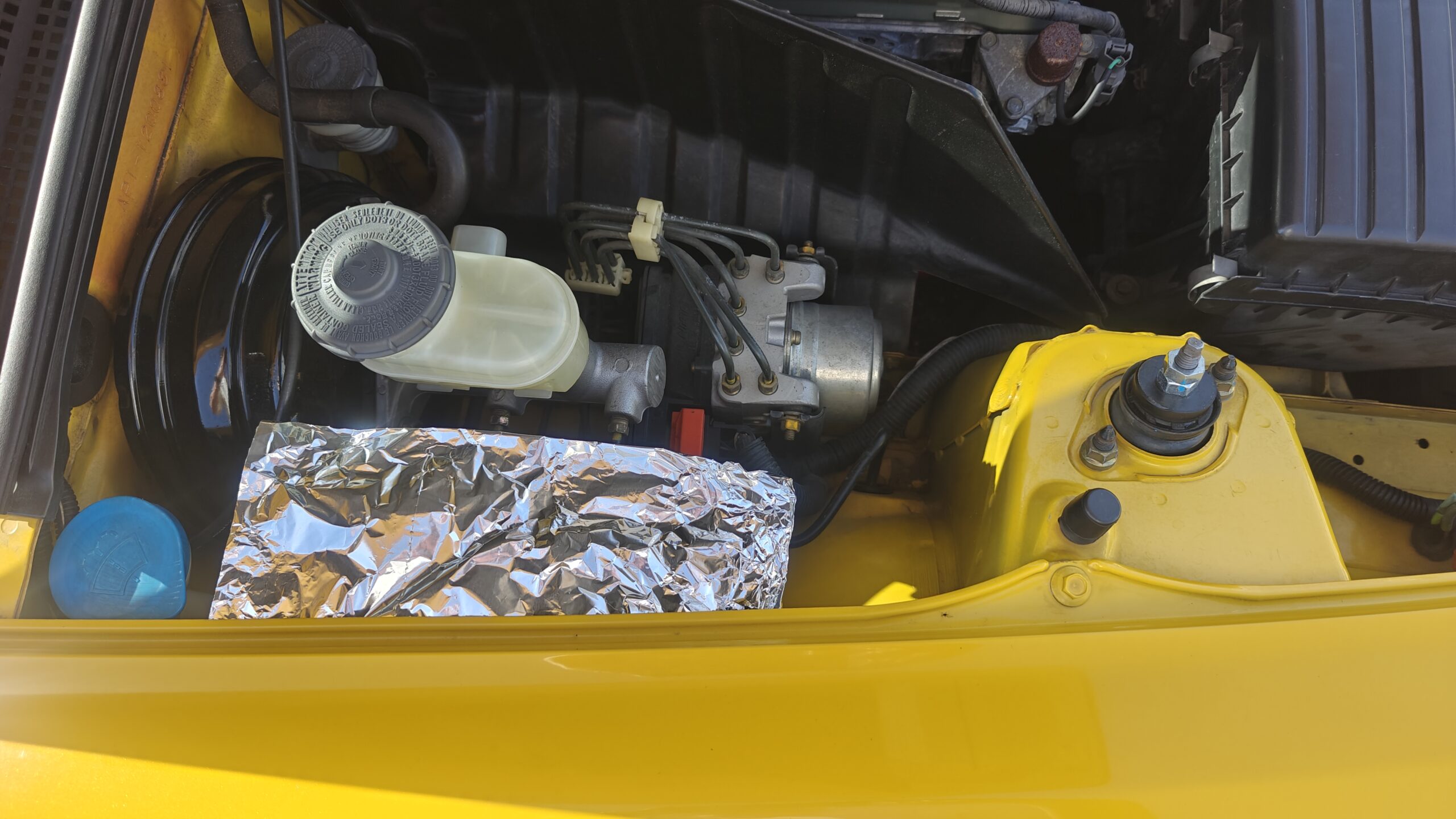
Driving a Honda S2000 (AP1/AP2) means living with the constant fear that your steering wheel will turn into a massive lump of lead. It is, quite frankly, the game of a mad aristocrat.
For S2000 owners, an Electric Power Steering (EPS) failure isn’t a matter of “if,” it’s a matter of “when.” It is a destiny we cannot escape. And the moment you hear the repair bill is in the thousands of dollars, the scream of the VTEC will start sounding more like a “death rattle.”
Today, I’m going to explain our tear-jerking defense strategy to avoid this “Heavy Steering Hell” for the measly cost of 100 yen (about 1 dollar).
First, what even is EPS? Most cars use a belt driven by the engine to pump hydraulic fluid and lighten the steering. But the S2000 is different. “I don’t want to waste a single milligram of engine power!” With that obsession, Honda chose to turn the steering with “Electric Power (a motor)” instead of the engine. That’s EPS. Thanks to this, 100% of the F20C’s 9,000 RPM glory is dedicated solely to driving. It was a choice made purely for performance.
As usual, I’ve gathered this knowledge from the internet, so I’m not 100% confident. Don’t sue me.
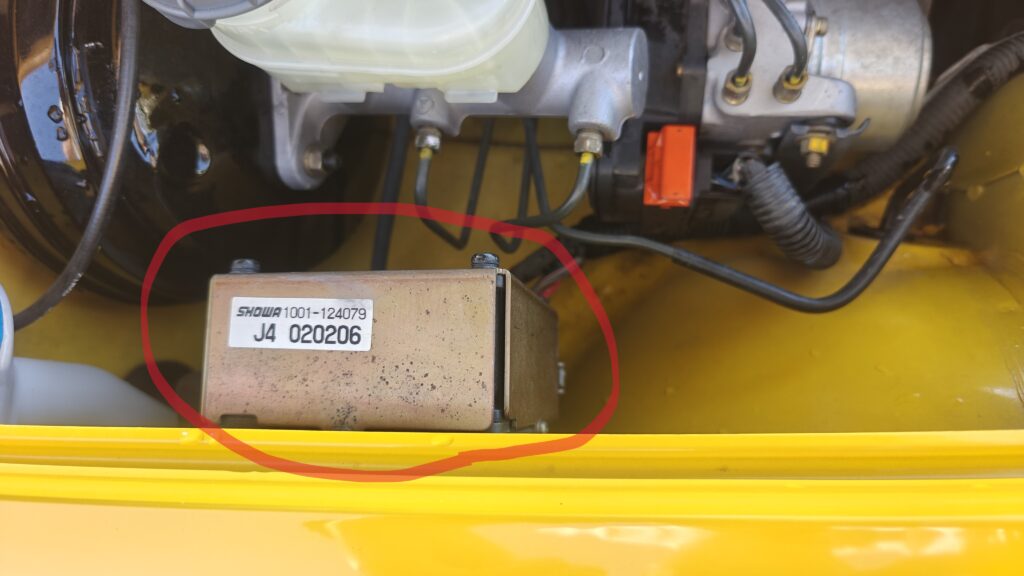
The “Three Musketeers” of EPS
The system operates with just three main players:
- Torque Sensor (The Scale): It measures the force you put into the steering wheel.
- ECU (The Commander): The “brain” that hears the sensor’s report and orders, “Alright, spin the motor this much!”
- Motor (The Strongman): The muscle that actually yanks the steering rack as ordered.
Thanks to this tag-team, even the heavy S2000 steering can be turned with a single finger (okay, that’s a massive exaggeration).
【Despair】The S2000 EPS Unit Dies by “Water.” Inevitably.
The S2000’s EPS was state-of-the-art back in the day. But now, a quarter-century later, a fatal flaw has been exposed: “Placement.”
The EPS Control Unit sits right near the bulkhead, directly under the gap between the hood and the front fender. This is, logically speaking, the worst possible spot.
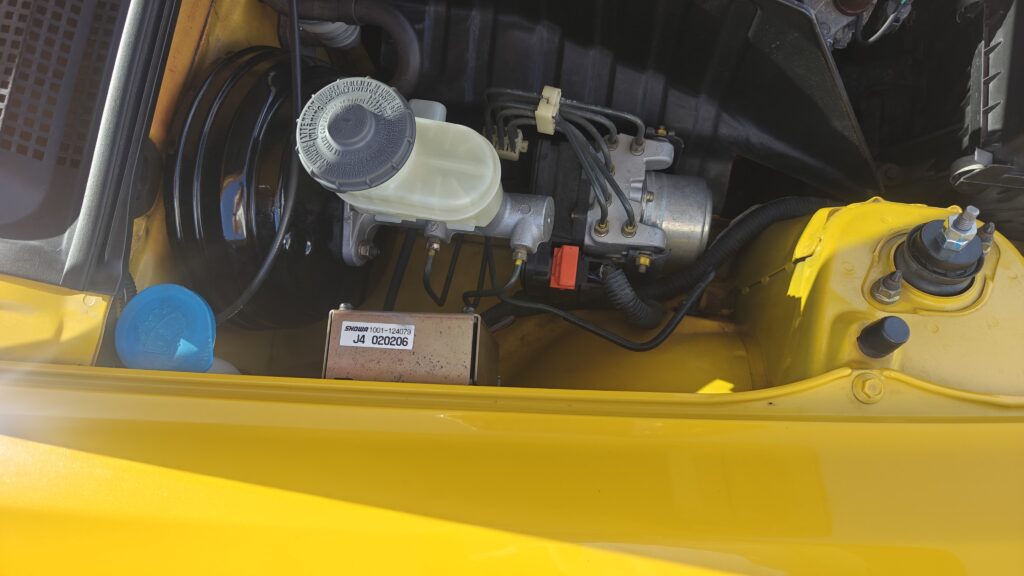
Whether it’s driving in the rain or the “car washing” we love so much, water pours through that gap and hits the unit directly. Water seeps through aged seals, corroding the internal circuit board. The result? Suddenly, your steering wheel becomes a 1.2-ton block of iron.
A World of Madness: Parts Costing Over $2,000
“It’s just wet? I’ll just go to the dealer and buy a new one!” …Yeah, no. It doesn’t work like that.
In the S2000 world today, the EPS parts situation is “Hell.” New units are discontinued for many models. If you’re lucky enough to find a “New Old Stock” unit, the price can exceed $2,000. Even used ones are a battlefield, going for high prices on auctions.
Repair services for these circuit boards are also becoming increasingly rare. You’re basically on your own.
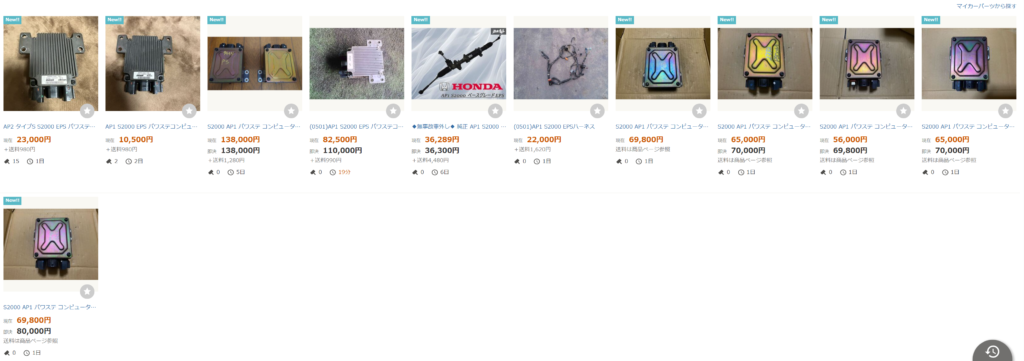
“Losing your steering assist costs as much as a fresh set of high-end tires.”
If that fact doesn’t make you shiver, you’re either a billionaire or a terminally ill S2000 junkie whose senses have gone numb.
Operation: “Aluminum Foil Defense Force” for 100 Yen
This is where I arrived at the “Aluminum Foil Strategy.”

Some specialty shops sell fancy metal shields. You could also try putting rubber seals between the hood and the body to stop the leak.

Is my aluminum foil “Tacky as hell”? Yes. I admit it wholeheartedly. But I have logical reasons for deploying this “Aluminum Foil Defense Force.”
- Extreme “Water Shielding” Look at the photos. The water from washing the car slides gracefully off the foil. The EPS unit stays almost bone-dry.
- Co-existing with “Heat” Water isn’t the only enemy; “Heat” kills seals too. Unlike a solid shield that traps heat, a “fluffy” layer of foil allows air to circulate. It’s high-level temperature management (probably).
- Insane “Low Cost” Use the money you saved to buy premium gas. Even if you replace it every month, it costs basically nothing.


Conclusion: Be Proud of the Tackiness. It’s the Way to Keep the S2000 Alive.

Even if some kid at the car wash points at my yellow S2000 and whispers, “Look, that guy put tin foil in his engine bay…”, I won’t flinch.
Because my S2000 is still carving through corners accurately today. If I have to choose between shivering at a $2,000 repair bill and wrapping my engine in aluminum foil, I’m choosing the foil every single time.
S2000 Owners: Don’t wait until the failure happens. Go to your kitchen right now and seize the aluminum foil.
That is the “Logical” defense protocol for surviving the year 2026!
(P.S. If anyone knows if putting aluminum foil here causes any actual mechanical issues, please let me know!)

Comments